New Food Pyramid Vs. The Old: Complete Guide For 2026
New Food Pyramid Vs. The Old: Complete Comparison Guide For 2026

- New pyramid emphasizes whole, minimally processed foods over refined carbs and added sugars.
- Increased protein and fat intake recommended to support metabolic health, muscle mass, and nutrient absorption.
- Experts divided on changes, with some praising alignment to modern science and others raising concerns about saturated fat.

The new food pyramid released this month marks a dramatic departure from decades of dietary guidance. Since its rollout, people have been actively comparing the new food pyramid to the original version introduced in the mid-1990s, and the differences are striking. The most notable shift is the emphasis on protein, healthy fats, and full-fat dairy, while grains, once the foundation of the model, have been reduced to the smallest category.
The 2026 food pyramid updates prioritize whole, minimally processed foods and increased protein intake, signaling a significant move away from the old food pyramid’s grain-heavy approach.
Introduction: Understanding the Evolution of the Food Pyramid
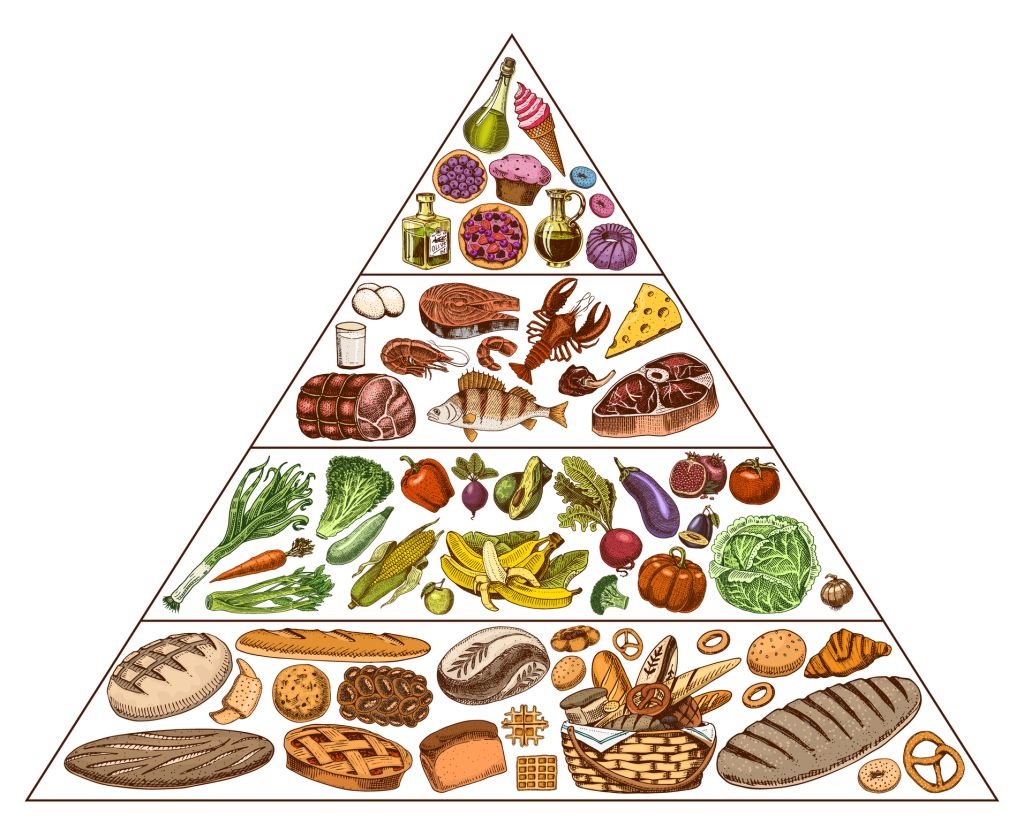
The food pyramid has long been a symbol of American nutrition advice, shaping how generations understood “healthy eating.” It was created as a visual tool designed to illustrate recommended daily food intake by organizing foods into groups based on how often they should be consumed. Traditionally, foods meant to be eaten most frequently, such as grains, fruits, and vegetables, appear at the wide base, while items to be consumed sparingly, like fats and sweets, sit at the narrow top.
The goal of the food pyramid is to encourage balanced, healthy eating by highlighting portion guidance, variety, and moderation to support proper nutrition and help reduce the risk of chronic disease. While the classic pyramid shape is widely recognized, modern nutrition models, such as MyPlate, have evolved from this framework to reflect updated dietary science.
The Department of Agriculture’s newly released dietary guidance, announced Jan. 7, introduces a redesigned food pyramid that looks almost unrecognizable compared to the one many people grew up with. This discussion of the old food pyramid vs. the new has ignited debate among nutrition experts, policymakers, and everyday consumers alike.
Introduction to the New Food Pyramid: What’s Changed in 2026
The 2026 food pyramid updates represent what federal officials have called a major reset of nutrition policy. Unveiled during a White House briefing on Jan.7, the new visual aligns with the administration’s “Make America Healthy Again” initiative. Health and Human Services Secretary Robert F. Kennedy Jr. framed the update as a return to basics, urging Americans to “eat real food.”
“The new guidelines recognize that whole, nutrient-dense food is the most effective path to better health and lower health care costs,” Kennedy Jr. said during the briefing, according to the Hill.
“The new framework centers on protein and healthy fats, vegetables, fruits, and whole grains. It’s upside down, a lot of people say. It was actually upside down before,” he added.
Kennedy Jr. said this new version of the food pyramid would help Americans “reduce disease risk more effectively than many drugs,” and noted that “all grains outperform refined carbohydrates.”
He added that “sugars, especially sugar-sweetened beverages, drive metabolic disease, and today, our government declares war on added sugar, highly processed foods loaded with additives, added sugar and excess salt.”
History of the Old Food Pyramid: What It Used to Emphasize
The U.S. Department of Agriculture’s earliest attempt at formal nutrition guidance dates back to 1894, when W. O. Atwater — a chemist and one of the agency’s first nutrition researchers — issued a warning in a Farmer’s Bulletin. That moment marked the beginning of the USDA’s ongoing challenge: translating evolving scientific knowledge into practical eating advice for the public. Nutrition science, however, looked very different at the end of the 19th century. At the time, essential micronutrients such as vitamins had not yet been discovered, leaving early recommendations based on limited understanding, according to NPR.
As scientific knowledge advanced, so did the USDA’s approach to visual dietary guidance. In 1943, the agency introduced a food wheel rather than a pyramid. Butter notably appeared on the wheel during a period of wartime shortages, when many Americans were turning to margarine as a substitute. Today’s Dietary Guidelines continue to recommend limiting saturated fats found in foods like butter and discourage margarine consumption due to its potential trans fat content.
One striking feature of the 1943 guidelines was their classification of fruits and vegetables into three categories. While critics at the time pointed out the lack of clear serving-size guidance, the visual emphasis on produce was evident and forward-thinking. Nutrition recommendations continued to undergo several revisions in the following decades, eventually leading to the introduction of the food pyramid in 1992.
That pyramid placed carbohydrates at its base, recommending six to 11 daily servings, while fruits, vegetables, meat, and dairy occupied smaller tiers. In hindsight, this structure has been widely criticized. We now understand that “carbohydrates worsen glucose and insulin — they have negative effects on blood cholesterol levels,” as Dariush Mozaffarian, dean of the Friedman School of Nutrition Science and Policy at Tufts University, told NPR in 2014. Replacing saturated fats with refined carbohydrates, he explained, “has not been useful advice.”
This framework remained largely unchanged until the debut of MyPlate in 2011. Compared to earlier models, MyPlate offered a cleaner, more intuitive design. While not without flaws, it represented progress by clearly illustrating that fruits and vegetables should make up half of every meal, a message that aligns more closely with nutritional understanding today.
Major Differences Between the New and Old Food Pyramids
Any food pyramid comparison immediately highlights how inverted the new model is. In the new food pyramid vs. the old design, foods meant to be eaten most frequently now appear at the top, while those to be limited sit at the bottom. Grains, once the foundation, are now the smallest category. Protein, fruits, vegetables, dairy, and healthy fats dominate the pyramid’s upper tiers. Protein has received particular emphasis, with recommended intake increasing significantly compared to past guidance. The stance on fats has also shifted dramatically, with full-fat dairy and certain saturated fats no longer treated as dietary villains.
Notably, the updated guidelines now promote the inclusion of “healthy” fats — including saturated fats — elevating them to the top of the pyramid alongside protein and dairy. While saturated fat intake is still capped at 10% of daily calories, the guidance stresses that these fats should come from naturally occurring whole foods, such as avocados, rather than highly processed foods, according to USA Today.
Scientific Evidence Supporting the Changes
The rationale behind these updates reflects years of emerging nutrition research questioning the effectiveness of low-fat, high-carbohydrate diets. Studies increasingly suggest that adequate protein supports muscle mass, metabolic health, and satiety, while certain fats play an essential role in hormone regulation and nutrient absorption. The revised protein recommendations of 1.2 to 1.6 grams per kilogram of body weight per day far exceed the long-standing minimum of 0.8 g/kg, reflecting updated evidence about optimal intake rather than mere deficiency prevention, according to USA Today.
Numerous studies have also consistently shown that diets rich in fruits and vegetables significantly lower the risk of heart disease, stroke, and cardiovascular-related death by reducing blood pressure, inflammation, and heart strain, with benefits seen for specific types like leafy greens, citrus, and berries, though starchy vegetables and juice show less benefit, according to The American Heart Association.
Practical Implications for Your Diet and Lifestyle
For everyday eaters, the old food pyramid vs. the new approach may require a mindset shift. Meals built primarily around pasta or bread may give way to plates centered on protein sources, vegetables, and healthy fats. The return of full-fat dairy also challenges decades of fat-free marketing and dietary habits. While the visual is striking, the practical takeaway is less about strict ratios and more about prioritizing whole foods over ultra-processed options.

Expert Opinions on the New Food Pyramid
Nutrition experts are divided on the changes. Supporters argue the new pyramid better reflects modern science and real-world eating patterns. Stanford neuroscientist Dr. Andrew Huberman and host of the Huberman Lab podcast, praised the new model.
“…Assuming overall calories are kept in check and people exercise & get sun(day)light, this looks spot on. Maybe up the veggies a bit, add low sugar fermented foods like sauerkraut & this is great.”
According to Fox News, Dr. Bobby Mukkamala, president of the American Medical Association, also gave a nod of approval to the updated framework, sharing that the changes “affirm that food is medicine and offer clear direction patients and physicians can use to improve health.”
He added, “The American Medical Association applauds the Administration’s new Dietary Guidelines for spotlighting the highly processed foods, sugar-sweetened beverages and excess sodium that fuel heart disease, diabetes, obesity and other chronic illnesses.”
Some weren’t pleased with the new pyramid. Neal Barnard, president of the Physicians Committee for Responsible Medicine, stressed that the framework needed clearer guidelines around saturated fat intake.
“The guidelines are right to limit cholesterol-raising saturated (‘bad’) fat,” Neal Barnard said in a statement, according to the Hill. “But they should spell out where it comes from: dairy products and meat, primarily. And here the Guidelines err in promoting meat and dairy products, which are principal drivers of cardiovascular disease, diabetes, and obesity.”
Common Questions About the Food Pyramid Revisions (FAQ)
One common food pyramid change FAQ question is whether grains are being eliminated entirely. The answer is no; grains are still included, but in smaller proportions. Another frequent question asks why fats are no longer restricted. Federal officials have pointed to updated research distinguishing between harmful trans fats and naturally occurring fats found in whole foods. Many also wonder why the pyramid returned after being replaced by the plate model in 2011. According to officials, the pyramid’s simplicity makes it a clearer educational tool when redesigned to reflect modern science.
Which Food Pyramid Should You Follow?
Ultimately, the debate surrounding the new food pyramid vs. the old highlights how nutrition guidance continues to evolve alongside scientific understanding. While the 2026 food pyramid updates may feel jarring at first, they reflect a broader shift away from fear-based eating and toward balanced, protein and vegetable-forward meals built from real foods.
Whether consumers fully embrace the new model or adapt parts of it, the message is clear: real food is a must in 2026.
SEE MORE:
Are You Too Clean? Super-Sanitized Environments Could Hurt Our Immune Systems
New African Food Pyramid Promotes Cultural Roots
New Food Pyramid Vs. The Old: Complete Comparison Guide For 2026 was originally published on newsone.com