Amanda Seales, Issa Rae & The 'Insecure' Snub Debacle
Amanda Seales, The ‘Insecure’ Tour & The Price Black Women Pay For Being ‘Unlikeable’ [Op-Ed]
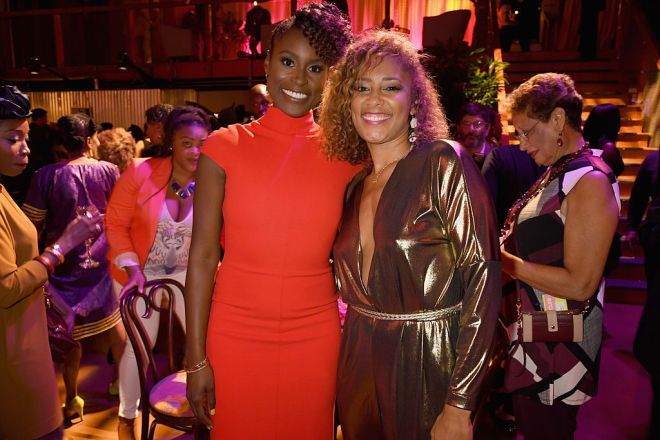
Last week, Issa Rae and showrunner Prentice Penny officially announced Insecure: The 10th Anniversary Tour, sending a wave of nostalgia through a fanbase that watched the groundbreaking HBO series redefine modern Black television. The announcement promised a victory lap celebration of the messy, brilliant, deeply relatable lives of Black millennials navigating Los Angeles.
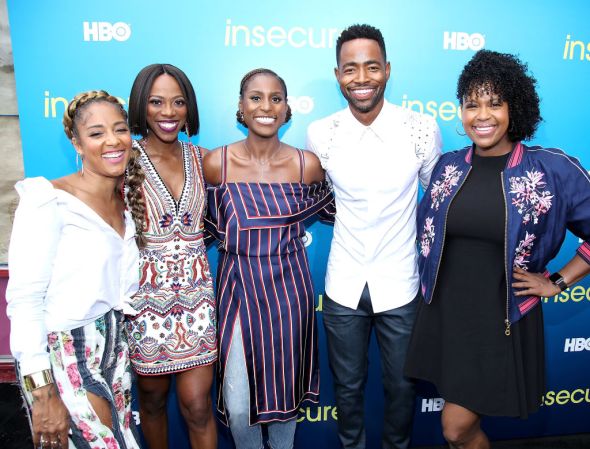
Joining Rae and Penny for the milestone tour are core cast members Jay Ellis (Lawrence), Yvonne Orji (Molly), and Natasha Rothwell (Kelli). Yet, one key player was missing to round out the show’s iconic “core four” friend group: Amanda Seales, who portrayed the bougie, impeccably styled, and quietly complex Tiffany DuBois. A number of Insecure fans shared disappointment in Rae not being able to figure it out.
RELATED CONTENT: Issa Rae Shares Her No-Nonsense Playbook for Winning — ‘Don’t Be Afraid To Be A B—ch’
The Spectrum of Empathy and the Self-Diagnosis Backlash
This rigid standard is not an isolated incident for Seales. We saw a similar dynamic unfold when she publicly disclosed her autism diagnosis. Rather than inviting a nuanced discussion on neurodivergence, her announcement was met with skepticism and outright mockery. Online commentators dismissed her experience because she identified as self-diagnosed, arguing that someone with her platform “should have the resources for a formal clinical evaluation.”
This dismissive posture ignored the reality facing thousands of Black women today. Across social media, Black women are actively healing by identifying late-in-life neurodivergence, late ADHD diagnoses, or autism spectrum traits. Many rely on self-diagnosis because the formal medical infrastructure remains plagued by racial bias, systemic costs, and diagnostic criteria historically modeled on young white boys.
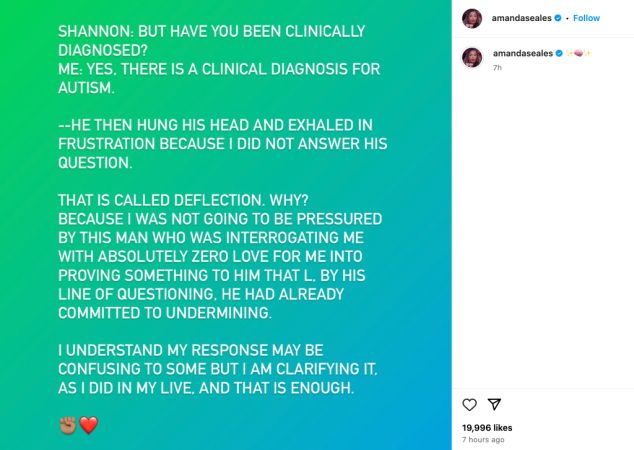
When an everyday Black woman shares her self-diagnosis journey, the community rallies with supportive comments, book recommendations, and shared stories of mask-wearing and burnout. But when Amanda Seales shared the exact same realization, the response was different: She can’t sit with us.
Her existing reputation as “unlikeable” revoked her right to participate in a collective moment of healing. We decided her personality disqualified her from the grace we routinely demand for ourselves.
Boundary Setting vs. Public Dogpiling
We have to hold two truths simultaneously without collapsing into a binary team-based mentality. Issa Rae is not a villain for choosing to proceed without Seales. As an executive producer, show creator, and business mogul, Rae has every right to curate her working environment, protect her mental space, and guard her intellectual property. If a professional relationship has dissolved due to interpersonal friction, disparaging public comments, or broken trust, Rae is under no obligation to force a reunion. Setting a boundary is healthy.
Could mediation have taken place behind closed doors to facilitate a professional win-win for a 10th-anniversary milestone? Perhaps, but executive leadership requires tough calls and Rae made hers.
Where the public strays into toxicity, however, is converting Rae’s boundary into a blood sport. There is a vast difference between an executive deciding, “This professional partnership no longer serves the team,” and an audience using that decision to fuel a relentless dogpile.
Social media flattens complex human dynamics. It strips away the nuance that naturally exists in real-life relationships. In the digital arena, you are either a saint or a monster. Real life exists entirely in the gray area. Amanda Seales can be a challenging collaborator for some and a deeply feeling human being who is rightfully experiencing FOMO with a milestone reunion.
RELATED CONTENT: Amanda Seales Calls Out ‘The Real’ For Being Real Shady
The “Unlikeable Black Woman” Trope
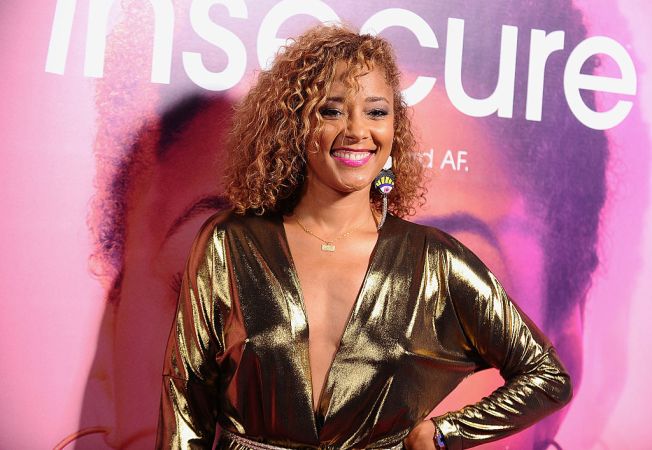
Part of the public friction surrounding Seales stems from her refusal to adopt the traditional PR playbook. Everyone is entitled to speak their truth, but audiences often recoil from Seales’s delivery, frequency, and raw execution.
In our personal lives, most of us have a friend who experiences a string of turbulent interactions, workplace disputes, or public misunderstandings. When that friend vents, we offer a private ear, constructive criticism, or a gentle reality check.
Seales’s primary error may simply be her venue. In an era where digital algorithms profit off conflict, broadcasting grievances to the general public guarantees that your pain will be weaponized against you. The general internet public is not a supportive group chat. It is a stadium full of spectators looking for entertainment, quick to apply the “unlikeable Black woman” trope to anyone who refuses to remain quiet and agreeable.
The friction behind Insecure also highlights a broader reality of Black Hollywood. While the industry preaches solidarity, it is subject to the same internal fractures, ego clashes, and personal fallouts as any other institution. When these fractures play out in full view of the public, the fallout becomes entertainment. Scandal drives engagement, clicks, and visibility.
Toward a More Compassionate Cultural Critique
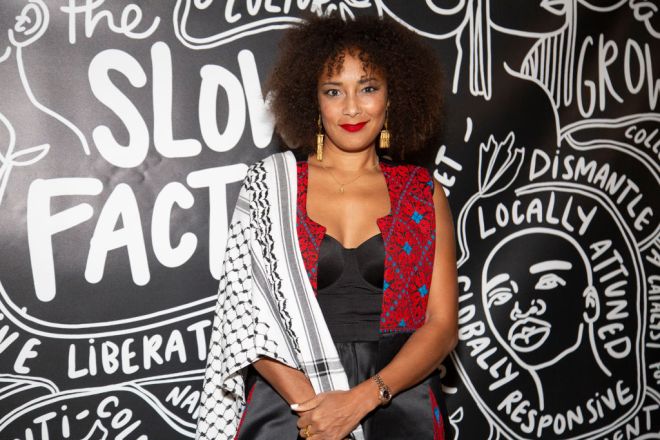
Insecure changed the landscape of Black television because it dared to depict Black women as beautifully flawed, deeply human, and fundamentally worthy of love while navigating their mistakes. It would be a disservice to the show’s legacy if its fans failed to extend that exact same grace to the real women who built it.
The incongruity is jarring. We celebrated a show defined by its capacity for growth, yet we lock real people into static caricatures. Once we brand someone as unlikable, we discard them—rarely returning to see if they’ve done the work, taken accountability, or evolved. On the rare occasion we do acknowledge their growth, we sometimes move the goalposts with an immediate ‘well, but…’ to keep them exiled. It is a strange cultural hypocrisy to offer endless patience, empathy, and second chances to fictional characters stumbling through their mess, while strictly withholding that same humanity from the real woman who brought one of them to life.
However, the shifting tide in the comments of Seales’s “Netflix Doc” video suggests that the audience might finally be catching up to the complexity of the art itself. Seeing Black women laughing at the satire while respecting the underlying grief is proof that we don’t have to choose a side in order to remain empathetic. Celebrating 10 years of Insecure without Tiffany DuBois feels incomplete, precisely because her presence added texture to the story. The fractures behind the scenes do not erase the art created on screen.
We do not have to endorse every statement Amanda Seales makes, nor do we need to vilify Issa Rae for setting firm professional boundaries. However, we can stop pretending that grief is only valid when it comes from the people we like. Empathy is not a reward reserved exclusively for the palatable. It is a fundamental decency we should share with one another, especially when the cameras stop rolling.
RELATED CONTENT: Amanda Seales Wants People To Know She’s Not An Alpha Kappa Alpha In Real Life Just Because Plays One On TV
Amanda Seales, The ‘Insecure’ Tour & The Price Black Women Pay For Being ‘Unlikeable’ [Op-Ed] was originally published on madamenoire.com